Roadmap. A single-source-of-truth for timelines, dependencies, and single-threaded-owners for everything your team plans to build. I've tried just about every roadmapping tool out there and have yet to find one that beats the versatility and simplicity of spreadsheet.
Here's the template I use.
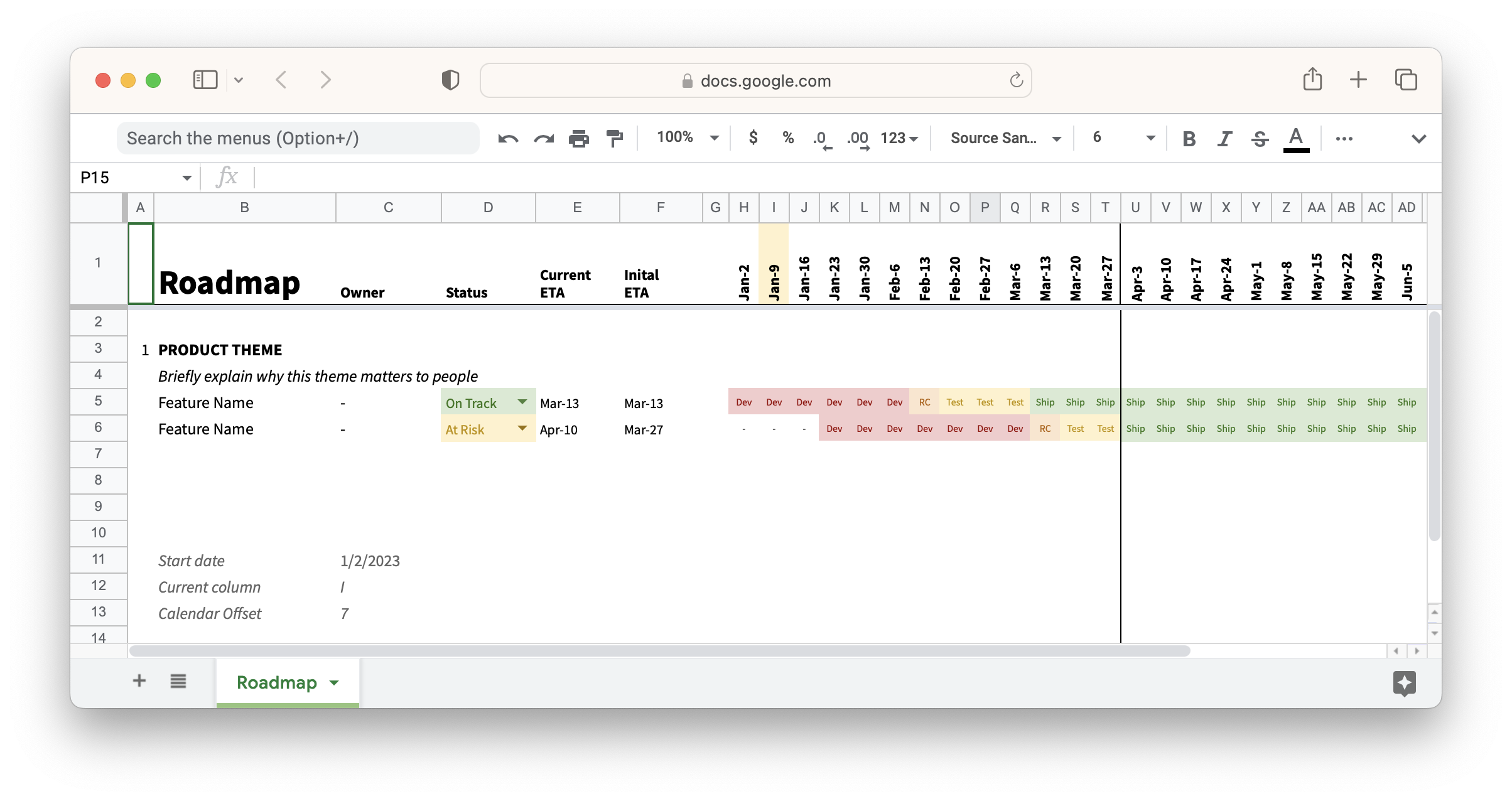
In your roadmap add a row for each feature you are committed to building. Only include features that have been thoughtfully evaluated and have a high enough ROI to justify the investment. Also include a column for links to product requirements doc and the single-threaded-owner who is responsible for feature delivery.
The remaining columns are for dates. Each column represent one week and color each cell to represent the expected feature status for that date. Features can be:
- Red: in design or in development
- Yellow: in an release candidate build (RC) or testing
- Green: shipped to all users
If you delegate the maintenance of your roadmap, you and all your cross-functional partners can reply on this source-of-truth to make decisions without setting up unnecessary meetings.
Group Features by Theme. A list of features alone can be overwhelming, add a bit more organization to help colleagues follow along. I suggest grouping features by investment theme, as explained in the corresponding product strategy.
For instance, you might have one theme focused on retention and another on product quality.
Highlight Dependencies. A roadmap is the best place to track both internal and external dependencies. If one feature depends on another, group the two features together and note the dependency in the feature name.